
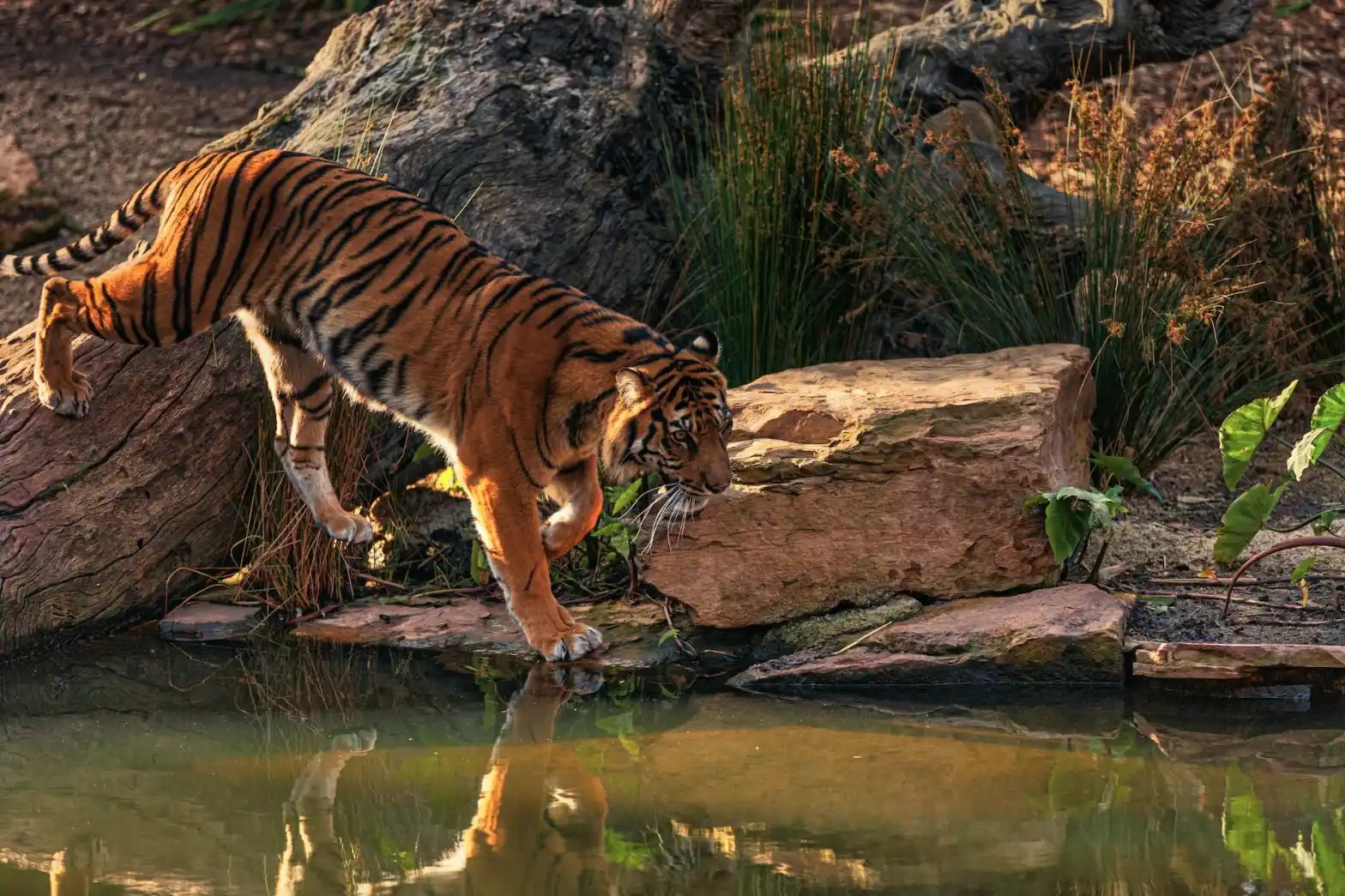
BLOGS Kalakkad Mundanthurai Tiger Reserve (KMTR) — Complete Travel Guide | Stay Near Ananta Vihara Nearby Attractions May 16, 2026 Kalakkad Mundanthurai Tiger Reserve (KMTR) Popularly known as KMTR, this reserve was created in 1988 by combining the existing and contiguous Kalakkad and Mundanthurai wildlife sanctuaries. Kalakkad-Mundanthurai was declared the first tiger reserve in Tamil Nadu. The second largest wildlife sanctuary in Tamil Nadu, the Kalakkad Mundanthurai Tiger Reserve is spread across a whopping area of 895 sq. km a tropical wet evergreen forest nestled in the serene shades of the majestic Western Ghats, situated in the Tirunelveli district of Tamil Nadu. KMTR forms part of the inter-state Agasthyamalai Biosphere Reserve straddling Kerala and Tamil Nadu. This part of the Agasthyamalai hills in the core of KMTR is considered one of the five centres of biodiversity and endemism in India by the International Union for Conservation of Nature (IUCN). The Western Ghats, Agasthyamalai Sub-Cluster, including all of Kalakkad Mundanthurai Tiger Reserve, is under consideration by the UNESCO World Heritage Committee for selection. For nature lovers and wildlife enthusiasts visiting KMTR, Ananta Vihara in Thirukolur is the most comfortable and conveniently located homestay perfectly positioned between the Tiger Reserve and the Nava Tirupati circuit. History of KMTR The Kalakkad Mundanthurai Tiger Reserve was created in 1988 by combining Kalakad Wildlife Sanctuary (251 km²) and Mundanthurai Wildlife Sanctuary (567 km²), both established in 1962. Astroved In 1988, both sanctuaries were merged to form KMTR under the Project Tiger initiative. This merger aimed to provide greater protection for the Bengal Tiger and preserve the Western Ghats’ biodiversity. Focus areas included habitat protection, anti-poaching measures, and tiger conservation. Human settlements in core areas were relocated to ensure better protection for wildlife. The Sacred Rivers of KMTR Among the rivers and streams, the Ganga, Thamirabarani, Ramanadi, Karayar, Servalar, Manimuthar, Pachayar, Kodaiyar, Gadananathi River, and Kallar form the backbone of the irrigation network and drinking water for the people of Tirunelveli, Thoothukudi, and part of Kanyakumari District. Seven major dams Karaiyar, Lower Dam, Servalar, Manimuthar, Ramanadi, Gadananathi River and Kodaiyar owe their existence to these rivers. The topography of Kalakkad is rugged with numerous perennial hill streams originating from the rainforest areas on the upper slopes. They confluence to form the rivers of Thamirabarani, Manimuthar, and Ramanadhi. There are dams built across the Thamirabarani River and its tributaries which lie inside the Tiger Reserve namely Papanasam Dam, Manimuthar Dam, and Servalar Dam. Wildlife What You Can Spot KMTR has at least 150 endemic plants, 33 fish, 37 amphibians, 81 reptiles, 273 birds, and 77 mammal species. As per the 2018 census, the tiger population is 16 to 18. Big Cats & Large Mammals The animals you could come across in this region include the Tiger, Leopard, Sambar, Indian Pangolin, Sloth Bear, Mouse Deer, Flying Lizard and so on, apart from reptiles such as King Cobra, Python, Pit Viper and Monitor Lizard. Full Wildlife List Category Species Big Cats Tiger, Leopard, Dhole (Wild Dog) Large Mammals Elephant, Gaur (Indian Bison), Sloth Bear, Nilgiri Tahr Deer Sambar, Chital, Barking Deer, Mouse Deer, Four-Horned Antelope Primates Nilgiri Langur, Bonnet Macaque, Common Langur Reptiles King Cobra, Python, Pit Viper, Monitor Lizard, Crocodile Others Giant Flying Squirrel, Porcupine, Otter, Jackal, Hyena, Wild Boar Birds A Birdwatcher’s Paradise KMTR is a birdwatcher’s paradise, home to species like the Great Indian Hornbill, Malabar Grey Hornbill, Ceylon Frogmouth, Oriental Bay Owl, and many others. Sunbirds, paradise flycatchers, black-rumped flameback woodpeckers, and white-cheeked barbets flitter and flutter from branch to branch giving visitors glimpses of green, cheery reds, whites, yellows, and purples across the forest canopy. Rare Endemic Species Endemic to the Western Ghats, the Kakachi shrub frog, Bob Inger’s bush frog, Kalakad gliding frog, and Gunther’s bush frog find exclusive refuge in KMTR species found nowhere else in the entire world. The Forest Experience What Visitors Say The forests of KMTR are teeming with life, although most of it remains hidden from view. We enter KMTR from Manimuthar town near the towering Manimuthar Dam immediately the anticipation of reuniting with wildlife sends a thrill through the body. As we climb higher up the mountain, the temperature drops. The forest is ever-changing from scrublands and towering rocky outcrops, we plunge into moist deciduous forest with chirping birds and sweet-smelling flowers. The real magic of KMTR lies beyond the Mundanthurai Plateau, in the biodiverse evergreen forest locations higher in the mountains in the primary forests around Kodamadi, Kannikatti Sengaltheri and Kuduraivetti, located in ascending order of elevation. Things to Do at KMTR Jeep Safari Early morning jeep safari is the best way to spot wildlife followed by trekking or birdwatching in the afternoon, and an optional evening safari or scenic walk. Nature Trails & Trekking There are 24 identified nature trails spread over the reserve giving a thrilling experience to trekkers of all levels. Night Safari Visitors can also go for a night safari with prior permission from the forest officials a truly extraordinary wildlife experience under the stars of the Western Ghats. Boating at Papanasam Dam Boating facilities are available at Papanasam Dam but swimming is strictly prohibited as it is populated with crocodiles. Sacred Waterfalls Major waterfalls inside the Reserve are Agasthiyar Falls, Banatheertham Falls, and Manimuthar Falls each a spectacular natural attraction in their own right. Entry Fee & Activity Charges Activity Fee Entry — Adult ₹20 per person Entry — Child ₹15 per person Nature Trail (6–10 persons) ₹2,000 Thalayanai Visit ₹500 Timings & Best Season Open Hours: 6:00 AM – 6:00 PM open all days throughout the year. Best Season: September to January the most ideal time for wildlife spotting. Season Experience September – January Best wildlife spotting — cool & lush October – March Pleasant weather — ideal for trekking June – September Monsoon — forest at its most lush & green March – May Hot — fewer crowds, good for birdwatching Climate The climate is tropical with variations depending on elevation. Summers (March–May) are hot with temperatures ranging
Plan Your Stay Today
Reserve your comfortable and serene stay at Ananta Vihara
Looking for a comfortable stay near Vaithamanidhi Perumal Temple? Contact us today to check availability and reserve your room.

Follow Us
Contact Info
86086 15550 | 86086 25550
bookings@ anantavihara.com
Ananta Vihara 1/42, Mutharamanan Kovil Street Near Vaithamanathi Perumal Temple Thirukolur, Tamil Nadu – 628612.
© 2026 All Rights Reserved